Sunday, May 24, 2020

Scrappy Survivors and Opportunists

A couple of daisy patches manage
to spring up between mowings
It may not look like much, but the wide mowed area on either side of the Greenway trail is an ecosystem in its own right. It is easy to see the ecosystem at work in the cells and wetlands that comprise the Sycamore Greenway corridor, with the diverse flowers and grasses, trees and shrubs, birds and butterflies all growing and mingling together.

These mowed areas, on the other hand, are generally regarded as places for dogs to do their business, and for weeds to grow--if they are regarded at all. But look closer.

The trailside ecosystem
There is no bare ground. Each vacant spot is quickly filled by some scrappy opportunist seizing its moment to put down roots and complete its lifecycle. But not any old plant can make it in this tough neighborhood; there are some characteristics that can make or break an individual's chances.

Because it is mowed regularly, if not as frequently as a home lawn, the plants that live here must either keep a low enough profile that mowing doesn't phase them, grow quickly enough to flower and set seeds before being mowed again, or otherwise endure repeated damage throughout the growing season while spreading vegetatively through rhizomes or other methods.

Although clearly not as diverse an ecosystem as a prairie remnant, or a well-maintained woodland, these patches of low-growing forbs and grasses provide food for many insects and birds. Sparrows will eat dandelion and other seeds ; tiny black medic flowers appeal to small bees and butterflies. Yarrow feeds katydids and assorted larvae, including my beloved Synchlora aerata (the "snazzerpillar"). The humble plantain serves as a host plant to Buckeye butterflies.
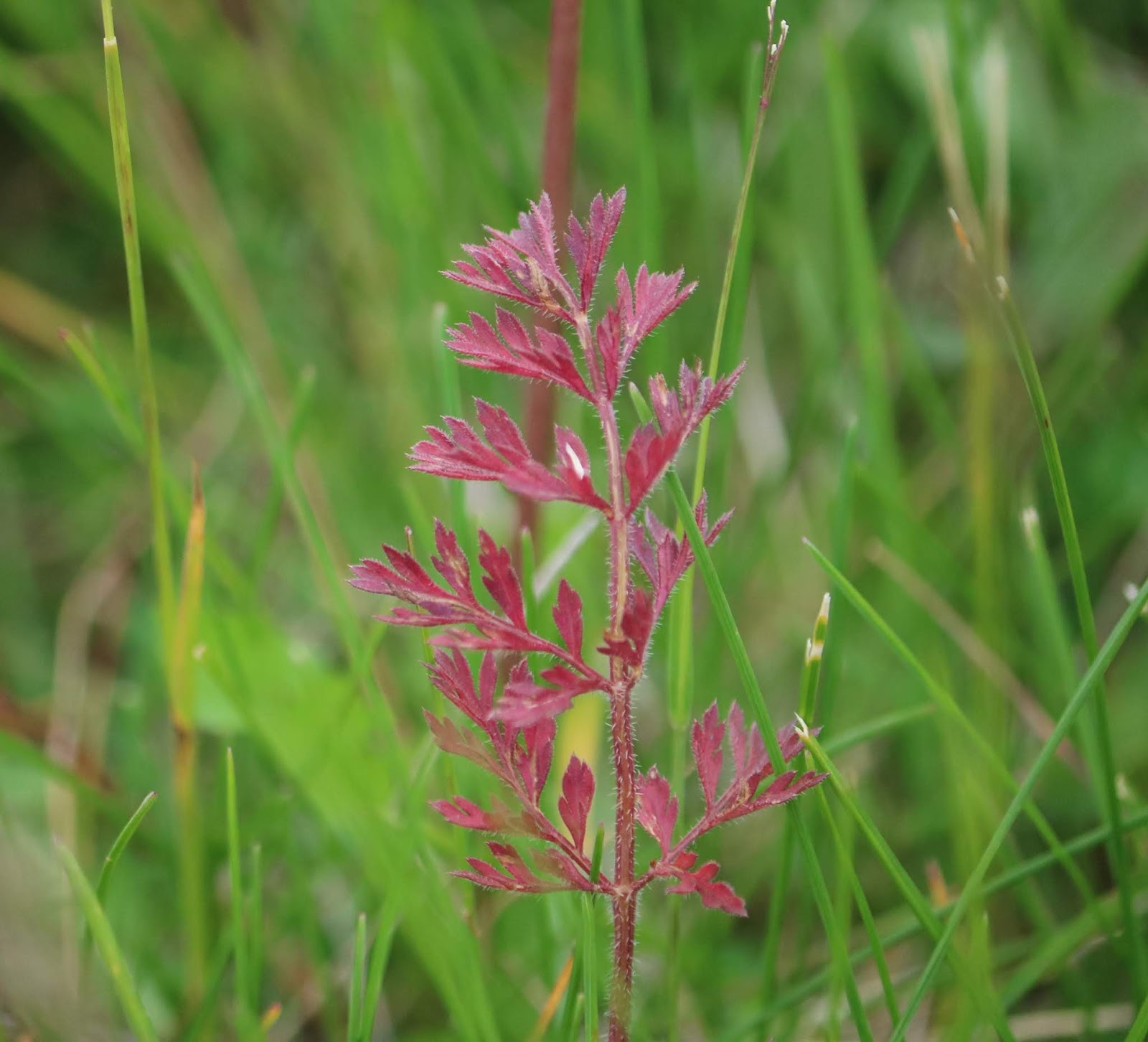
Maybe Queen Anne's Lace?
In a pretty red color.

In a couple months, the mowed edges of the trail will be hopping with teeny tiny grasshopper nymphs like popcorn, vacating your path if you walk alongside the pavement. They are well worth a closer look, if you take the time to examine the miniature nymphs after they alight on a blade of grass.

Blackseed Plantain
This edge habitat exists due to human intervention; a higher degree of intervention, with herbicides and other efforts to eradicate all but a single, desired grass, would leave the system far less diverse. Less intervention--less mowing--could potentially shade out some of these scrappers that thrive on disturbance but can't quite compete as well against taller neighbors. So it is one more part of the Greenway that is worth getting to know!


Yarrow

Yellow Wood Sorrel


Black Medic

Saturday, May 16, 2020

Public Bathing


In recent months, many people have been discovering, or rediscovering, their yards as habitat, and the wildlife they can encounter and support through their landscaping choices. Have you been putting our feeders to lure birds, or adding different varieties of feeders to attract different birds?
A house sparrow tests the water then thinks better of a dip.

Birds are such an immediate and visible reminder of our connection to other species. Where insects are often too small or fast-moving to notice, and mammals are usually (and with good reason) wary of making an appearance around humans, many birds share our same daytime schedule, and are not terribly shy about getting within easy spotting distance outside our windows. Many types of feeders allow us to bring different birds to our yards: hummingbird feeders full of sweet nectar, peanut feeders for titmice and woodpeckers, thistle socks for goldfinches, and old reliable sunflowers beloved by many of our feathered visitors.
Peeping at a bathing house finch.

And even better than birdfeeders are the baths! Hearing the tiny "thunk" followed by vigorous splashing will bring me to the window faster than a cat, where I will lurk behind potted plants and spy on the bather. The house finch that perches on the lip of the flat saucer, delicately testing the water with its bill over and over again, teasing the moment when it hops in and begins shaking and fluffing, dipping its head and flapping its wings. It is a moment of abandon and vulnerability, out in the open, eyes often closed against the splashing water. Some birds just take a quick splash and then fly off, while others will linger--dip and shake, dip and shake--sometimes pausing to cock an eye skyward before resuming.

These yard birds have it good, with fresh, clean water provided daily. Those less citified cousins on the Greenway, however, make do in puddles and shallows when they can. Although they seem a bit...dirty...to my eyes, the birds seem to enjoy them with as much vigor as the more sophisticated tubs.

Common Grackle bathing in one of the Greenway cells.

Sunday, May 10, 2020

Shepherd's Purse: a scrappy survivor with a deadly secret

This unassuming little plant taught me two three! things today!

Shepherd's Purse (Capsella bursa-pastoris) is a non-native from Europe that can be seen popping up along the edges of streets and sidewalks in grassy areas that haven't been mowed in a while. It is a ruderal (my new word!) species, meaning it is well adapted to disturbed areas, of which humanity leaves a trail wherever we go.
 
Shepherd's Purse, like the similar-in-appearance Field Pennycress, is a member of the Brassica, or cabbage (also mustard and cruciferous) family. It's tiny flowers are fairly nondescript, but it can be recognized by its obcordate (second new word! meaning a reverse heart shape, attached to the stem at the pointy end instead of the roundy end) seedpods that supposedly resemble the purse of a shepherd from days of yore.

The second third bit of knowledge imparted is that of "protocarnivory" in plants. Most people are familiar with carnivorous plants like pitcher plants, sundews and Venus' flytraps, which snare or snatch insects that wander into their traps. Other plants exhibit a more insidious method of capturing and utilizing invertebrates for their own purposes. 

The seeds of Shepherd's Purse, for example, have been found to lure nematodes (minuscule roundworms found in soil) with tasty mucilage on their seeds; when the nematodes feed, they are killed by toxins and their tiny carcasses enrich the soil in which the seeds will germinate. 

Who could have imagined what secrets lurked in the lives of these weedy little plants alongside the trail?